Homes are sitting longer. Showings are slower. Here’s how smart owners are protecting themselves by preparing for both outcomes at once.
When homeowners decide to sell, they usually go all in. They declutter, repaint, fix the dripping faucet, patch the drywall, service the HVAC, stage the home, and hire a photographer. They hope those investments lead to multiple offers and a quick sale.
In some cases, they do.
But today’s Washington, DC housing market isn’t behaving like it did a few years ago. Homes are sitting longer. Showings are slower. Open houses sometimes draw more curious neighbors than serious buyers. Even well-prepared homes can go weeks without meaningful activity.
For many owners, that’s more than frustrating. It’s expensive. They’re no longer living in the property. They’re carrying two housing payments. Maybe they’ve already bought another home. Maybe they’ve relocated for work. Maybe they’re paying both a mortgage and rent while waiting for a buyer.
Eventually, every seller starts asking the same question.
“What if we rented it instead?”
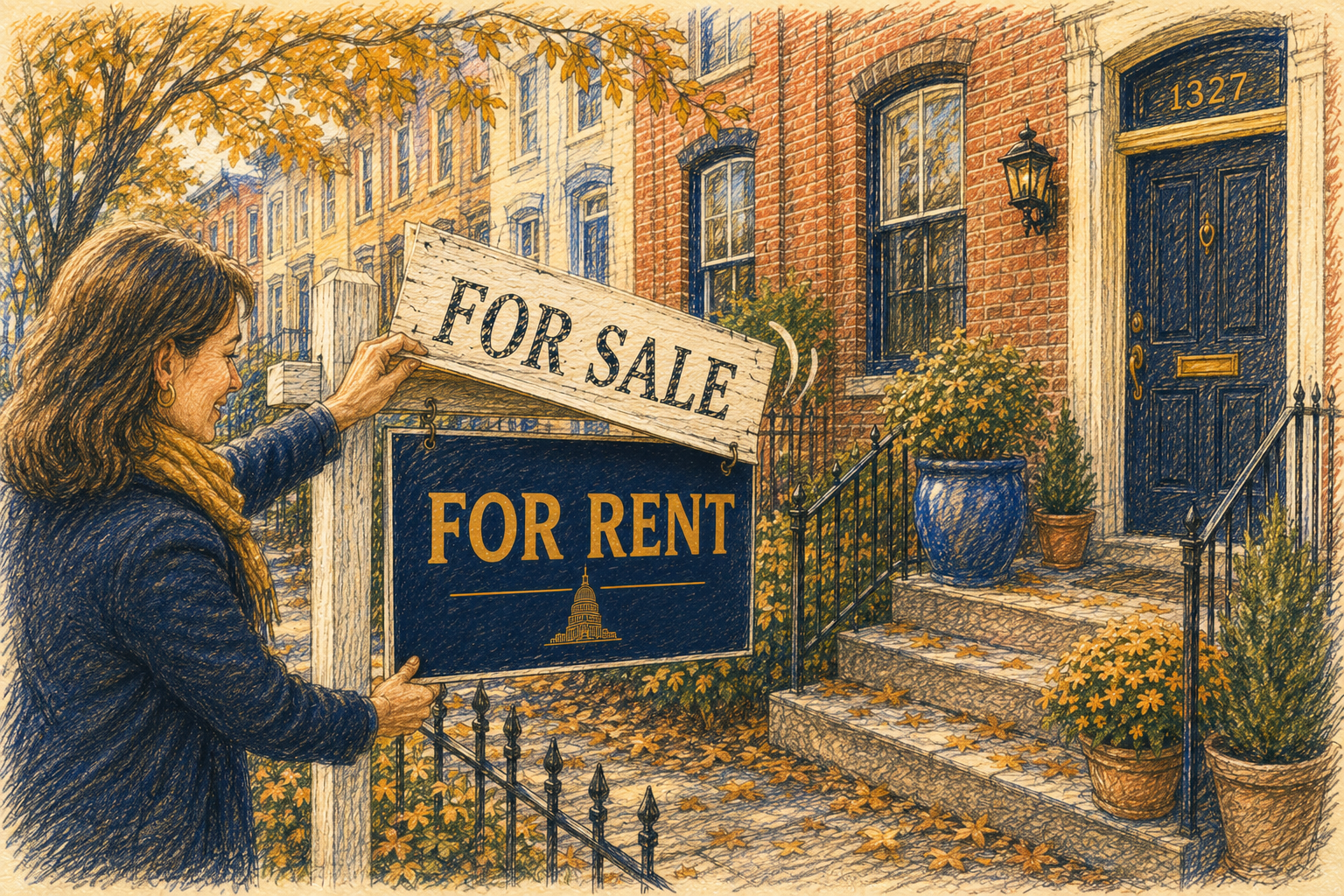
Over the past year, we’ve seen more owners make that transition than at any point in the past decade. It’s becoming increasingly common to see a property marketed for sale and for rent at the same time, keeping owners’ options open while easing the financial pressure of an extended vacancy.
It’s a smart strategy. It just takes a little planning.
The Good News: Most of Your Investment Isn’t Wasted
One of the biggest misconceptions we hear is that preparing a home for rent means starting over. Fortunately, that’s rarely the case. If you’ve already invested in getting your home ready to sell, you’ve probably completed many of the projects we’d recommend anyway.
These improvements benefit both buyers and renters:
- Fresh paint in neutral colors
- Professional cleaning
- Flooring repairs or replacement
- Updated lighting
- Minor cosmetic improvements
- Serviced mechanical systems
- Well-maintained landscaping
- Professional photography
- Decluttered living spaces
All of it helps create a better first impression, whether someone’s looking to buy the home or just live in it. That’s money well spent, no matter which direction you take.
Where “Move-In Ready” and “Rent Ready” Begin to Differ
Preparing a rental isn’t just about making it prettier. It’s about making it functional, compliant, durable, and ready for someone else to call home.
Many owners are surprised by how many items buyers might overlook, or negotiate later, that landlords need to address before handing over the keys. Depending on the jurisdiction, that can include:
- Completing required rental licensing
- Scheduling and passing housing inspections
- Verifying smoke and carbon monoxide detector placement
- Confirming required handrails, safety features, and GFCI outlets
- Testing appliances and documenting their condition
- Replacing HVAC filters
- Rekeying or replacing exterior locks
- Preparing detailed move-in documentation
- Creating an inventory of keys, remotes, fobs, and access devices
In Washington, DC especially, rental compliance involves significantly more than finding a tenant. Many municipalities require inspections, licenses, and documentation before a property can legally be rented, and those requirements often take longer than owners expect.
That’s why we encourage sellers to start thinking about rental readiness before they actually need it.
Don’t Wait Until the Listing Expires
One of the biggest mistakes we see is waiting until the home officially comes off the market before starting the rental process. That’s when the clock really starts working against you.
Obtaining licenses, scheduling inspections, preparing lease documents, pricing the rental correctly, and marketing the property all take time. Owners who wait until after deciding to rent often create several additional weeks of vacancy that could have been avoided.
Instead, we encourage owners to have the conversation early, even if renting is only a backup plan. Having a plan doesn’t mean you’ve given up on selling. It simply means you’ve protected yourself if the market doesn’t cooperate.
Sometimes the Best Strategy Is Both
One trend we’ve seen grow substantially over the past year is marketing properties for sale and rent simultaneously. That approach isn’t right for every property, but in some situations, it gives owners real flexibility.
If the right buyer comes along, fantastic. If an excellent tenant is ready to move in, owners have another path forward. Rather than watching a property sit vacant indefinitely, owners keep their options open while reducing financial uncertainty, and can respond to changing market conditions instead of reacting after months of carrying costs.
Working With Your Real Estate Agent, Not Around Them
“If my Realtor is handling the sale, can EJF Rentals still help?”
Absolutely, and it’s one of our favorite ways to work. Our goal has never been to replace the sales agent. We simply become another member of the team.
If your agent has already invested in professional photography, floor plans, and marketing materials, there’s often no reason to duplicate that effort. We can frequently use those existing assets, with permission, helping owners avoid unnecessary expense while getting the rental to market faster.
If your Realtor is open to listing the property for rent themselves, we can step in once a tenant is secured. Many agents enjoy helping clients buy and sell homes but have little interest in the day-to-day work of ongoing property management. That’s where we come in.
Once the lease is signed, we take over the ongoing management responsibilities, including:
- Tenant communication
- Rent collection
- Maintenance coordination
- Routine inspections
- Financial reporting
- Lease renewals
- Vendor management
- Regulatory compliance
That lets the sales agent keep focusing on what they do best, while their client gets professional management long after closing, or in this case, after leasing. It’s a partnership that benefits everyone, especially the property owner.
Think Beyond Today’s Decision
Preparing a home for sale doesn’t mean you’ve ruled out renting. Preparing a home to rent doesn’t mean you’ve abandoned the idea of selling. The most successful owners approach today’s market with flexibility, recognizing that timelines shift and the best financial decision isn’t always the one they originally planned.
By preparing your property for either outcome, you avoid rushed decisions later. You reduce vacancy if your plans change. You minimize duplicate expenses. And you position yourself to move quickly when opportunity arrives.
The Bottom Line
No one lists their home expecting to become a landlord. But today’s market has reminded us that flexibility is one of the most valuable assets an owner has.
Whether your goal is to sell next week, rent next month, or simply keep every option available, preparing your property with both outcomes in mind can save significant time, money, and stress.
If you’re beginning to wonder whether renting might become part of your plan, don’t wait until the “For Sale” sign comes down. Have the conversation early. We’ll gladly work alongside your Realtor, use the marketing materials they’ve already created wherever possible, and help you understand what additional steps may be needed to make your property truly rent ready.
Because sometimes the best backup plan isn’t really a backup at all. It’s simply another smart option.