
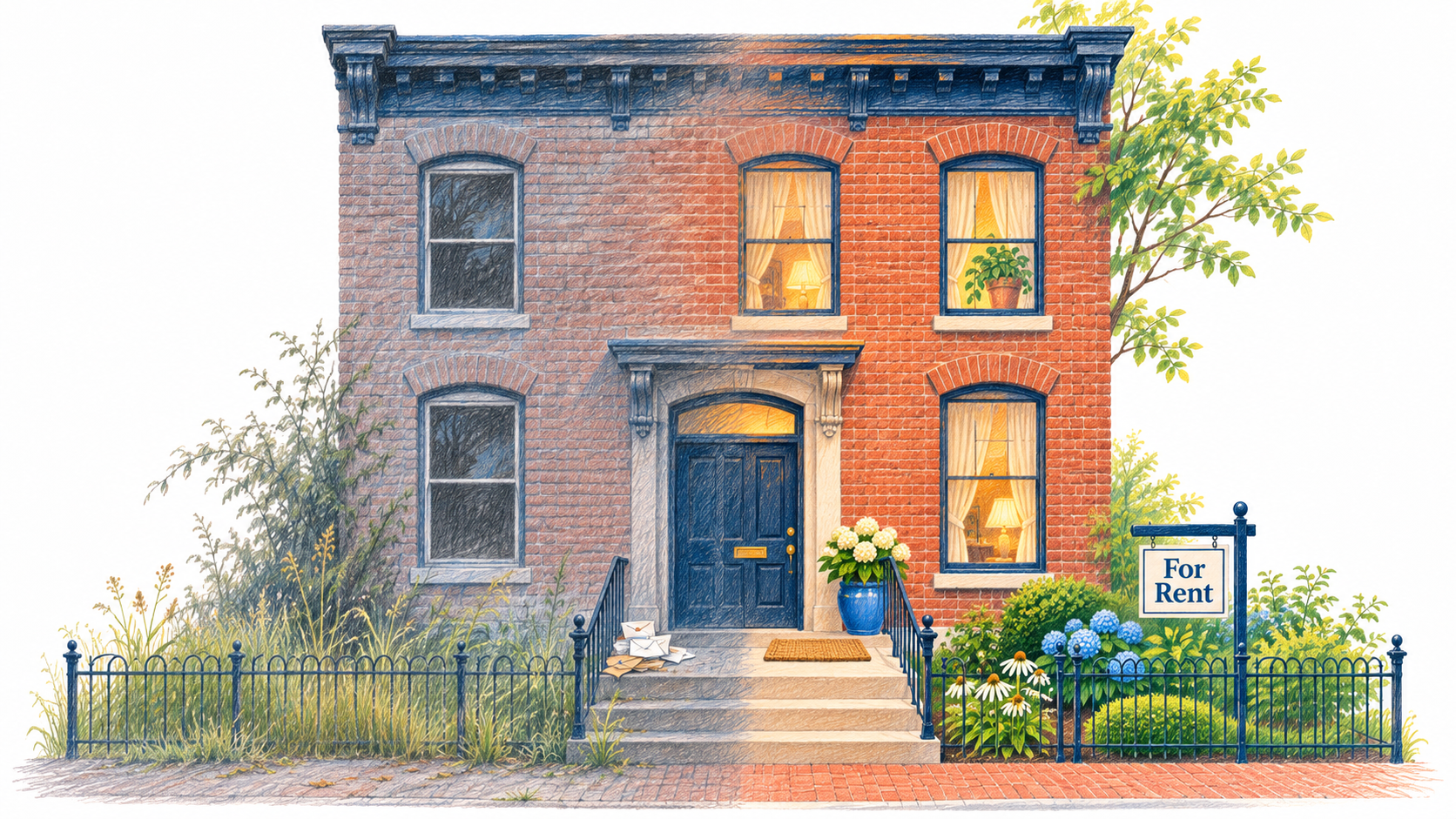
An empty property can become an expensive property. Here's what DC owners should know about vacant and blighted designations, potential tax increases, exemptions and putting an unused property back to work.
If you've owned property in Washington, DC for any length of time, you probably know that keeping up with the District's rules and regulations can sometimes feel like a part-time job. Between licensing, inspections, rent registration and the occasional change in requirements, there's always something new to keep on your radar.
Here's another item worth adding to that list: vacant property enforcement.
The District is making a concerted effort to identify vacant and blighted properties, notify owners, and encourage those properties to return to productive use. While the objective is understandable- protecting neighborhoods, addressing neglected buildings and encouraging housing availability- the financial implications for property owners can be significant.
And here's the part that some owners may not realize: A property doesn't necessarily have to be falling apart to create a problem. An otherwise perfectly serviceable house or building that has simply been sitting empty can potentially be classified as vacant and subject to a substantially higher property tax rate.
For owners who have been trying to sell a property without much success, or those who have inherited a property and haven't decided what to do with it, this is particularly worth understanding.
Let's break down what's happening, the difference between vacant and blighted properties, and what you can do to protect yourself- and potentially put that property to work.
First, What's the Difference Between Occupied, Vacant and Blighted?
These terms aren't interchangeable, and understanding the distinction is important because the tax consequences are very different.
Occupied properties
Generally speaking, an occupied property is one that is being lived in or otherwise actively used. For property tax purposes, occupied properties fall into the applicable residential or commercial classifications, depending on their use.
For residential properties, the applicable Class 1 rate is currently $0.85 per $100 of assessed value for Class 1A properties, with a separate split-rate structure for certain Class 1B properties. Commercial properties fall under Class 2, with rates based on assessed value.
Vacant properties (Class 3)
According to DC's Department of Buildings (DOB), a property may be considered vacant if it has not been continuously occupied. The District considers a number of factors when making that determination, including:
Little or no electrical, gas or water usage.
Accumulated mail.
Reports or complaints from neighbors.
Lack of window coverings or visible furniture.
Unsecured or easily accessible openings.
Deferred maintenance, such as overgrown landscaping, deteriorating paint or damaged gutters.
A boarded-up dwelling.
Importantly, vacancy doesn't necessarily mean a property is in disrepair. A perfectly decent home that has been sitting empty while its owner tries to sell it may still attract attention.
Properties classified as vacant are assigned Class 3 status, with a tax rate of $5.00 per $100 of assessed value (5%).
Blighted properties (Class 4)
Blighted is a separate and more serious designation. A blighted property is a vacant building that the District determines is unsafe, unsanitary or otherwise threatens the health, safety or general welfare of the surrounding community.
DOB considers conditions such as:
A building being boarded up or subject to condemnation proceedings.
Compromised or unsecured doors, windows and other openings.
Holes, breaks, graffiti or deteriorating materials on exterior walls.
Exposed wood or metal that has not been protected against weather and deterioration.
Unsafe balconies, porches, stairways and other exterior structures.
Blighted properties are assigned Class 4 status, with a tax rate of $10.00 per $100 of assessed value (10%).
In other words, a property can be vacant without being blighted, but a blighted property is necessarily vacant under the District's classification.
That distinction matters. An owner who has a property that is simply unoccupied faces a different set of circumstances than someone whose property has been identified as a potential safety or maintenance concern.
How Much Could This Actually Cost?
Let's put the tax rates into perspective.
Imagine you own a residential property assessed at $500,000.
Property classification | Illustrative annual tax |
|---|---|
Occupied Class 1A (0.85%) | $4,250 |
Vacant Class 3 (5%) | $25,000 |
Blighted Class 4 (10%) | $50,000 |
These are simplified illustrations using the applicable rates and a $500,000 assessment, before other applicable credits or adjustments.
That's a difference of $20,750 annually between the occupied Class 1A and vacant Class 3 examples. If the property is classified as blighted, the difference becomes even more substantial.
For an owner who is already carrying a mortgage, insurance, utilities and maintenance expenses on an empty property, that additional tax burden can quickly change the economics of holding onto it.
The rates are established by the District and may change, so owners should always consult the current DC Office of Tax and Revenue property tax rates.
DC Is Taking a More Active Approach to Identifying Vacant Properties
So how does the District identify these properties?
DOB responds to complaints from residents and other members of the community, conducts inspections and maintains information about properties identified as vacant or blighted.
If a property is reported, DOB may inspect it. If it determines that the property meets the criteria, the agency can post a notice or sticker on the building and send correspondence to the owner advising them of the designation and registration requirements.
And here's something important: Owners don't necessarily have to voluntarily identify their property as vacant before the District can take action. DOB can make that determination following its own inspection.
Under District law, properties that have been vacant or blighted for 90 days or more generally must be registered. Failure to register can result in civil penalties of $1,000, $2,500 and $5,000, in addition to the potential higher property taxes.
The initial registration fee is currently $350, with a $500 annual renewal fee.
The District also provides a public dashboard where owners and interested parties can review properties identified as vacant or blighted.
The takeaway? Don't assume that because you haven't received a letter, your property isn't on the District's radar. If you own an unoccupied property, it's worth being proactive rather than waiting for a notice to arrive.
Can You Avoid the Higher Tax Rate? Understanding Exemptions
Yes, potentially. And this is where owners need to pay attention.
The District recognizes that not every vacant property is being neglected or intentionally left unused. Sometimes an owner is actively renovating a property, navigating probate, waiting on approvals or trying to find a buyer or tenant.
Under the Vacant to Vibrant Amendment Act, new exemption eligibility provisions took effect October 1, 2025, expanding or clarifying the circumstances under which certain owners can qualify for relief from the higher vacant-property tax classification.
The important distinction is that an exemption does not necessarily mean the property is no longer considered vacant. Rather, it allows an eligible property to receive relief from the higher tax rate for an approved period.
Some of the qualifying circumstances include:
1. Actively marketing a property for sale or rent
Owners who are genuinely seeking to sell or rent their property may qualify for an exemption. Supporting documentation, including a listing agreement and an MLS listing, is required.
For single-family residential properties, the exemption is limited to half a tax year. Commercial and mixed-use properties may qualify for up to two tax years.
This is particularly relevant for owners who have a property listed for sale but haven't been successful in finding a buyer.
2. Active construction or rehabilitation
Owners undertaking legitimate construction, renovation or repairs may qualify for an exemption.
Depending on the circumstances, this can range from a half-tax-year exemption while permits are being pursued in good faith to a maximum of three tax years when an approved permit exists and the property is actively undergoing qualifying work.
3. Probate or litigation
Properties involved in probate proceedings or litigation affecting title may qualify for up to three tax years of exemption, subject to the applicable documentation and eligibility requirements.
4. Pending development or outside approvals
If an owner is waiting for an approval from a qualifying District board or agency, an exemption of up to two tax years may be available.
5. Substantial economic or personal hardship
Certain circumstances, including bankruptcy, significant medical events, involuntary unemployment and qualifying personal or financial hardships, may support an exemption of up to two tax years.
There are additional eligibility requirements for these categories, and supporting documentation is essential.
One other important consideration: Non-government exemptions generally cannot exceed five tax years within any 12-year period. Exemptions are reviewed annually, can be withdrawn, and are not necessarily automatic renewals.
Owners should also understand that the newer exemption provisions apply on or after October 1, 2025, and are not retroactive.
The District's Vacant and Blighted Buildings page provides the current eligibility criteria and application resources.
What If You Receive a Notice That Your Property Has Been Classified as Vacant or Blighted?
First, don't ignore it. And don't assume that the designation is necessarily correct. If you receive a notice, I would recommend taking the following steps:
1. Review the notice carefully.
Determine whether DOB has identified the property as vacant or blighted. These are two different classifications, and the response may be different depending on which one applies.
Pay particular attention to the date, the stated basis for the determination and any response, registration or appeal deadlines. Don't let the notice sit on your kitchen counter while you figure out what to do.
2. Determine whether the property is actually occupied.
If someone is living in or actively using the property, and you believe the designation is incorrect, contact DOB and request an occupancy inspection.
Gather supporting documentation. Depending on the circumstances, this might include a current lease, utility bills, evidence of occupancy or other records demonstrating that the property is being used.
DOB has a process for reviewing occupancy claims and determining whether a property should be removed from the vacant-property list.
3. If the property is vacant, determine whether you qualify for an exemption.
Even if the property is genuinely vacant, you may qualify for an exemption based on your circumstances.
Review the applicable requirements, gather the necessary documentation and submit the appropriate Vacant and/or Blighted Building Response Form.
The District generally requires owners to resolve outstanding DOB civil infractions or debts, or obtain confirmation that no outstanding debt exists, as part of the exemption process.
Applications can be submitted through the District's Citizen Access Portal or by following the instructions on the DOB website. The current exemption guidance directs owners to submit the completed form to vacantbuildings@dc.gov.
4. If the property is designated blighted, address the underlying conditions.
An exemption alone isn't necessarily going to solve a blight designation. Owners generally need to demonstrate that the conditions causing the designation have been corrected.
That may mean securing openings, repairing exterior damage, addressing unsafe structures or completing other necessary maintenance. Owners who disagree with the designation should also review the separate blight appeal process.
The bottom line: Be responsive, document your position and communicate directly with DOB. The longer an issue goes unaddressed, the more complicated- and potentially expensive- it can become.
Here's Another Option: What If You Just Rented the Property?
This is the part of the conversation I think deserves a little more attention.
We regularly speak with property owners who have a house, condo or investment property listed for sale. Sometimes the market cooperates and a buyer comes along quickly. Other times, the property sits on the market for months, the seller reduces the price, showings slow down, and eventually the owner starts wondering whether it's worth continuing to wait.
Meanwhile, the property isn't generating any income.
There's a mortgage to pay, insurance, utilities, maintenance, taxes and the ongoing expense of keeping the property presentable. And if the property is unoccupied long enough to receive a vacant designation, the potential tax implications add another layer to the equation.
At some point, preferably sooner than later, it makes sense to ask a different question:
If the property isn't selling, why not consider renting it?
Of course, renting isn't necessarily the right answer for everyone. An owner may have a specific reason for selling, may need access to the proceeds or may not want to become a landlord. There are also considerations involving the length of a potential lease, the timing of a future sale and any applicable tenant protections.
But for an owner who is willing to consider the alternative, renting can offer several advantages.
Generate income instead of carrying the property. Rather than allowing an asset to sit idle, rental income can help offset the mortgage, taxes, insurance and other carrying costs.
Put the property to productive use. An occupied, properly maintained and legally rented property is no longer simply sitting empty.
Buy some time. An owner who isn't getting the offers they want may prefer to rent the property and revisit selling when circumstances are more favorable.
Maintain the investment. With the right tenant and professional management, the property can continue to serve as an investment rather than becoming another responsibility on the owner's to-do list.
And let's not overlook the possibility that the property may simply be more attractive to a renter than it is to a buyer at the current asking price.
The sales market and rental market don't always move in lockstep. A home that has struggled to attract a buyer may generate meaningful rental interest, depending on its location, condition, layout and price.
Naturally, owners should evaluate the numbers and their longer-term plans before making the decision. And if the property has been designated vacant, they should understand that the exemption for active marketing may be limited. Renting the property is a separate decision from obtaining an exemption, and owners should confirm the applicable requirements and tax classification with DOB.
Not Sure the Property Is Ready to Rent? That's Where We Can Help.
One of the most common reasons owners hesitate to rent a property is that they don't think it's ready.
Maybe it needs fresh paint, a few repairs, landscaping, cleaning or some general attention before it can be marketed. Perhaps the owner has been focused on selling and hasn't considered what would need to happen to transition the property into a rental.
That's a conversation we're happy to have.
At EJF Rentals, we work with owners throughout the DC Metro area to evaluate properties, identify what needs to be done to get them rent ready and help navigate the process of bringing them to market.
That can include coordinating necessary repairs, preparing the property for professional photography, establishing an appropriate rental price, marketing the property, screening prospective tenants and handling the leasing process.
And for owners who don't want to manage the property themselves, we can provide full-service property management, taking care of the ongoing responsibilities after a tenant moves in.
It's also worth remembering that renting isn't necessarily an irreversible decision. Depending on the owner's circumstances and the terms of the lease, it may be a practical way to generate income while preserving the opportunity to sell at a later date.
Our goal isn't to convince every property owner to become a landlord. It's to help owners understand their options and make an informed decision about an asset that may otherwise be sitting idle and costing them money.
Thinking about turning your vacant property into a rental?
Not sure where to start? Conrad C. Bennett, Director of Business Development at EJF Rentals, can help you explore your options, understand your property's rental potential, and determine the next steps.
Don't Let an Empty Property Become an Expensive One
The District's efforts to identify and address vacant and blighted properties aren't going away. If anything, owners should expect continued attention to properties that are unoccupied, particularly those that show signs of deferred maintenance.
Whether you're holding onto a property while waiting for the right buyer, managing an inherited property, renovating a building or simply haven't decided what to do next, it's worth understanding how the District's classification and tax rules may affect you.
Check your property's status. Understand the difference between vacant and blighted. If you receive a notice, respond promptly. And if you're eligible for an exemption, don't assume it will happen automatically- take the time to apply and provide the supporting documentation.
But perhaps most importantly, don't overlook the opportunity sitting in front of you.
Renting may be a worthwhile alternative. Rather than continuing to carry the costs of an unused property, you may be able to turn it into an income-producing investment.
At EJF Rentals, we're happy to help you explore those options. Whether you need a little guidance getting a property rent ready, assistance finding a qualified tenant and a property management team to handle the details, let's talk.
Sometimes the best next move isn't waiting for the market to change. It's putting your property back to work.
Have questions about your property's next move?
Whether you're considering renting, preparing to sell, or simply weighing your options, a conversation with an experienced property management professional can help you make a more informed decision.
Talk to an Expert
ABOUT THE EXPERT
Conrad C. Bennett
Realtor | Property Manager | Director of Business Development at EJF Rentals
Conrad brings a passion for real estate and deep expertise in single-family property management. A founding member and past president of the DC Chapter of NARPM, he holds the RMP® designation.
Through his involvement with DCAR’s Public Policy Committee and the Board of Realtors, Conrad helps owners and investors navigate the rental market and grow and protect their real estate assets.
Contact Conrad
Email: Conrad@ejfrealestate.com
Phone: 202.803.7200
LinkedIn: Connect with Conrad
Please note: This article is intended for general informational purposes and is not legal or tax advice. Property owners should consult the appropriate DC agencies and their legal or tax advisors regarding their individual circumstances. EJF Rentals is not a law firm or accounting firm.